
Choosing the right look for your property is a bigger commitment than most people realize. You aren’t just picking a "fence", you are picking the backdrop for your family BBQs, your morning coffee, and your kids' birthday parties for the next twenty years. It is the frame around your private world.
If you’ve been scrolling through composite fence colors, you probably already know that the days of "plastic-looking" grey boards are long gone. The industry has evolved, and at New Era Wall Panels, we’ve seen a massive shift toward materials that don't just mimic nature but actually improve on it.
In this guide, we’re going to break down the textures, the tech, and the trends so you can choose a fence that looks as good in a decade as it does the day it’s installed.
Composite Fence vs. Wood
Before we get into the color selection, we must first deal with the huge issue in the garden. Why not just use regular cedar or pine?
The reality of the composite fence vs. wood debate usually hits home about three years after installation. That is when a natural wood fence starts to show its age. It warps, it splinters, and it begins to turn that weird, patchy grey that makes a house look neglected. Further to this is the "Saturday of Sadness" which is the unavoidable weekend of power washing, sanding, and staining that comes every couple of years.
Composite fencing is like enjoying the feel of wood without the worries of damaging it. It comprises both the recycled wood fibers and plastic making it a product of the planet, zero rot, and zero termites. Additionally, it will not turn to look like a colorless ghost.The color you choose at newerawallpanels.com is the color it stays.
Trending Now: Best Composite Fence Colors for 2026
Picking a shade is not only what appeals to the eye in a catalog. You need to take into account aspects like how it reacts to sunlight, how it conceals dirt, and how it matches with the siding of your house besides. Here are the best composite fence colors dominating the market right now:
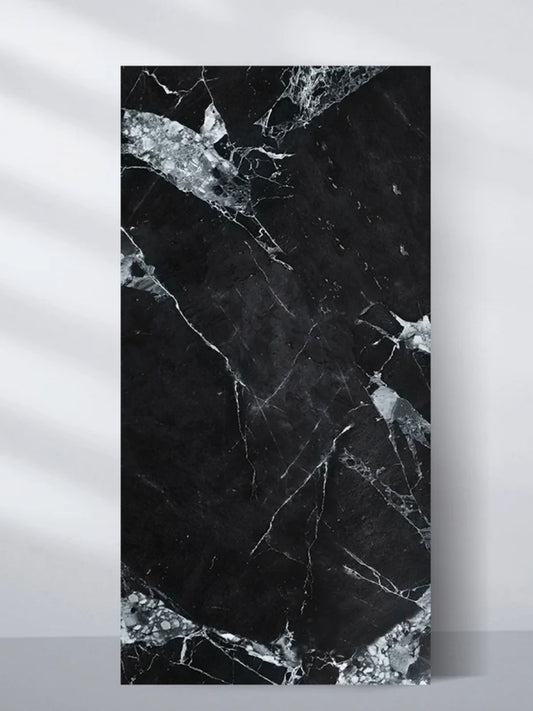
1. The "Midnight" Frame (Charcoal & Black)
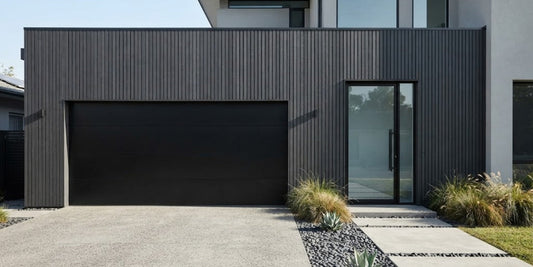
Today, the black composite fence is the hottest design trend. Although a black fence may feel scary, in fact, it is a type of the shadow of a frame of your garden. The green-plant and colorful-flower scenes. It "illustrates" a black background terrifically. It feels modern, edgy, and high-end. Plus, it is incredibly forgiving when it comes to showing grass stains or dust.
2. The "Warm Walnut" (Deep Browns)
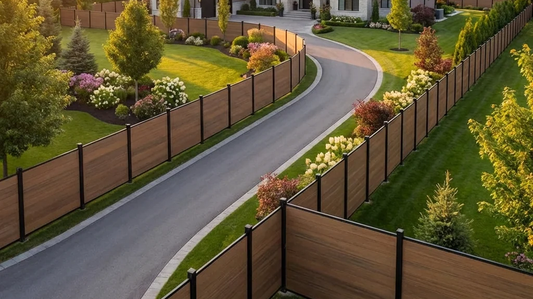
If you want that classic, cozy "Old World" feel, deep browns are the way to go. These shades are timeless. They give you the "luxury estate" look without the luxury of maintenance. Deep browns tend to feel very grounded and look particularly striking against brick homes or white farmhouse-style siding.
3. The "Coastal Grey"
Perfect for modern builds or beach-style homes. With light greys, it is possible to make even a small backyard look and feel larger and airier. A light grey composite fence would not only create a private area for you on a smaller urban lot but would also give you a feeling of not being boxed in.
Composite Fence Textures
Previously, a "fake" fence was easy to recognize because it was too smooth. It was reminiscent of a huge Lego block. Modern composite fence textures have changed the game completely.
Today’s boards feature deep, embossed wood grains that catch the light and create shadows. Some even have "multi-chromatic" finishes. This means there are subtle streaks of different shades in a single board—just like real timber. What gives the New Era Wall Panels the industrial-appearing organic view of them is the sun's striking of the panel.
Texture Suggestion: A brushed finish is totally ideal for a matte, non-reflective touch, whereas a deeply-embossed grain is just the right one if you aim to have that rough, rustic wood effect.
 |
 |
Fresh Composite Fencing Ideas to Level Up Your Yard
If you want to move beyond a basic "perimeter" look, you need to think about how the boards are actually put together. Here are a few composite fencing ideas that we are seeing in high-end landscape designs:
● The Horizontal Shift: Most people install boards vertically by default. Turning them horizontally instantly makes your yard look modern and "designer." It creates long, clean lines that make a yard feel wider.
● The "Shadowbox" Effect: The alternative staggered arrangement of the boards on both sides of the rail is their main feature. It is a good design choice for windy areas because it lets the air flow through and creates an interesting 3D effect that changes with your movement alongside it.
● Mixed Media: The fusion of composite panels and black aluminum posts or even stone pillars is a trending idea. It breaks up the "wall of wood" feeling and adds architectural interest.
 |
 |
 |
Composite Fence vs. Wood: The Financial Reality
We have to be honest—composite has a higher upfront cost than pressure-treated pine. But a "human" look at the numbers tells a different story.
If you factor in the cost of high-quality stain, the rental of a power washer, and the value of your own time every two years, a wood fence actually becomes more expensive after about year seven. When you consider that a composite fence from New Era Wall Panels can last 20 to 30 years without needing a single drop of stain, the investment pays for itself in both cash and sanity.
Why Quality Matters (The "Sun Test")
Here is a pro tip: be careful with "budget" composite found at big-box hardware stores. Cheap boards often lack a protective "cap" layer. Without this capping, the boards can expand and contract too much in the heat, causing your fence to sag or "smile."
At New Era Wall Panels, we focus on co-extruded composites. This implies that the core is enclosed in a protective covering which is amalgamated with UV inhibitors. Be it a locality where you face torrid summers or icy winters, color will not bleach off, and the boards will not become brittle.
Tags:
Previous
Best Acoustic Panel Designs for Offices and Studios | Improve Sound & Style
Next
Composite Fencing: Durable and Stylish Outdoor Solutions
Related articles
-
Oct 16 2026