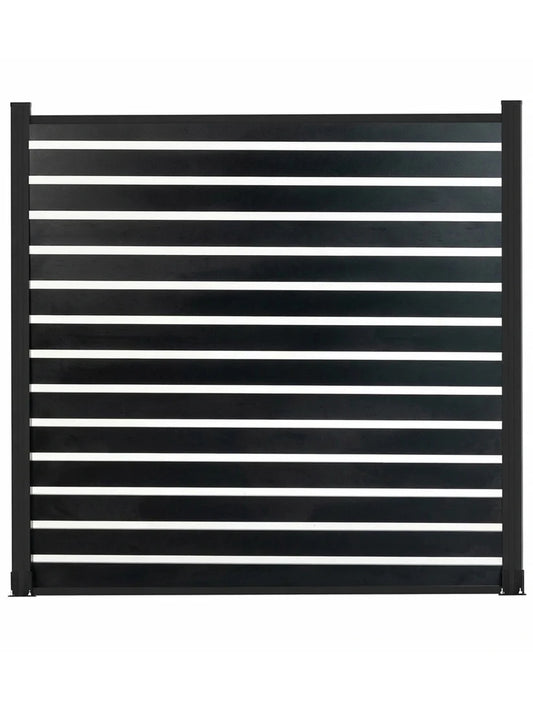
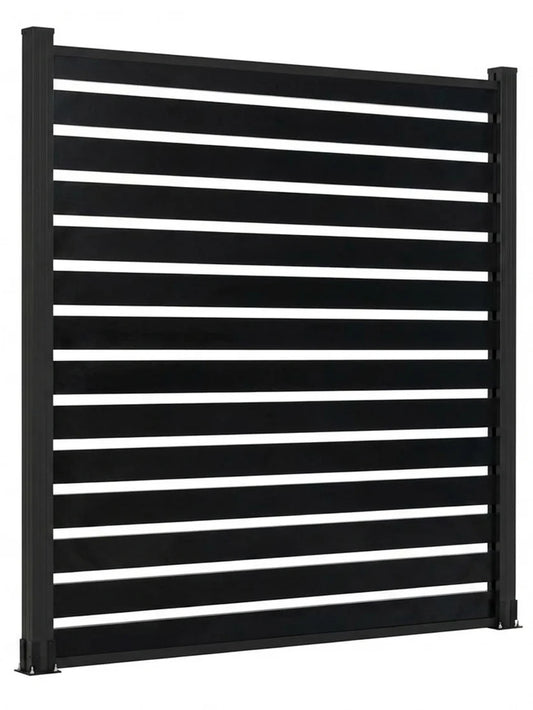
Modern Privacy for a Range of Outdoor Settings
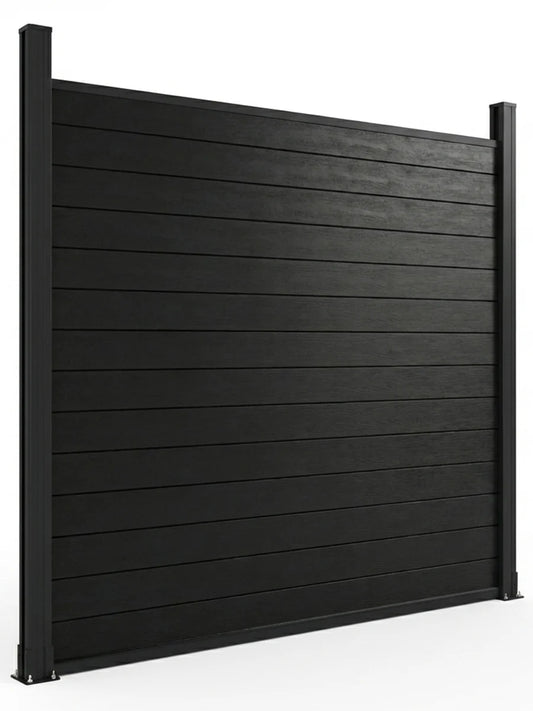
Aluminum fencing offers a practical way to create defined boundaries while maintaining a clean, architectural appearance. The contemporary horizontal slat format works well with modern homes, luxury estates, multi-family developments, commercial properties, hospitality venues, and institutional environments. It can also be used to organize patios, gardens, courtyards, landscape areas, recreational facilities, municipal projects, and pool surroundings.
Choose a full-privacy configuration when maximum visual screening is the priority, such as along a backyard, property boundary, patio, or outdoor gathering area. Semi-privacy arrangements can provide separation while creating a more open visual effect. Before selecting a configuration, consider the desired sightline, the surrounding architecture, and how the fence will relate to gates, walls, landscaping, and adjacent structures.
Aluminum Construction and Outdoor Finishes
These modular fence systems are constructed from 6063-T5 aluminum alloy, combining structural strength, corrosion resistance, and lighter handling than many traditional fencing materials. Aluminum does not rust and is recyclable. Its low-maintenance characteristics make it well suited to outdoor locations exposed to rain, snow, humidity, sunlight, and temperature changes.
Depending on the selected product, components use powder-coated or anodized finishes designed to resist moisture, corrosion, UV exposure, fading, and outdoor weather conditions. Routine care is generally straightforward: periodically remove surface dirt and outdoor debris using cleaning methods appropriate for the selected finish. Inspecting connections and surrounding landscaping can also help keep the installed fence looking orderly.
Modular Components and Installation Planning
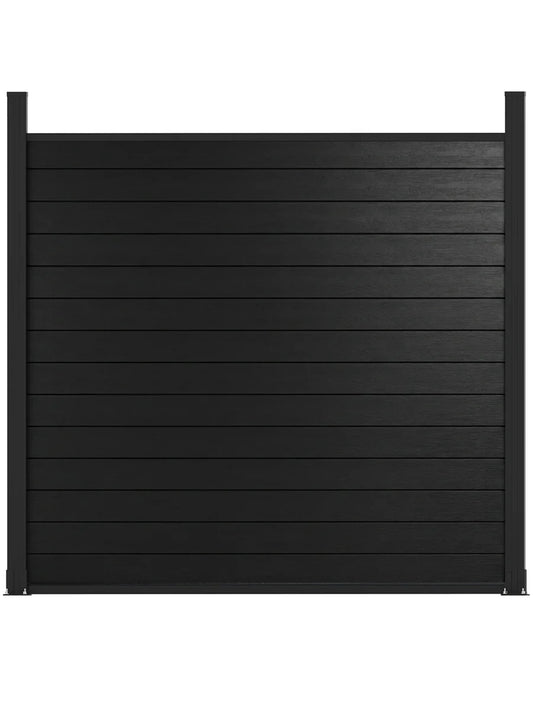
The interlocking design is intended to simplify assembly without welding. A 72-inch-wide by 72-inch-high full-privacy fence uses horizontal panels measuring 5.75 feet wide by 3.15 inches high. The complete configuration weighs 67 pounds. The modular system can also support an 8-foot fence height when assembled with the appropriate components.
The Full Privacy Kit includes 16 large panels, one post, two top and bottom covers, one base, four corner brackets, four expansion screws, one post cap, and four self-drilling screws. Included hardware supports assembly, but every project should be planned for its specific site and layout. Confirm the product configuration, post locations, ground or mounting surface, corners, transitions, and gate placement before beginning installation. Local requirements may affect acceptable fence height, setbacks, pool barriers, and property-line placement, so verify the rules that apply to the project location.
Choosing an Aluminum Fence Configuration
Start by determining whether the project calls for full screening or a balance of separation and visibility. Then measure the planned fence run and identify changes in direction, openings, and connection points. Consider how the horizontal profile and finish will coordinate with the building exterior, hardscaping, and landscape design.
For commercial, educational, hospitality, recreational, or multi-family projects, account for how people move through the space and where controlled access may be needed. For residential projects, prioritize the views to be screened and the outdoor areas that need definition. Matching the privacy level and modular components to the site helps create a cohesive aluminum fence installation with a modern, uniform appearance.